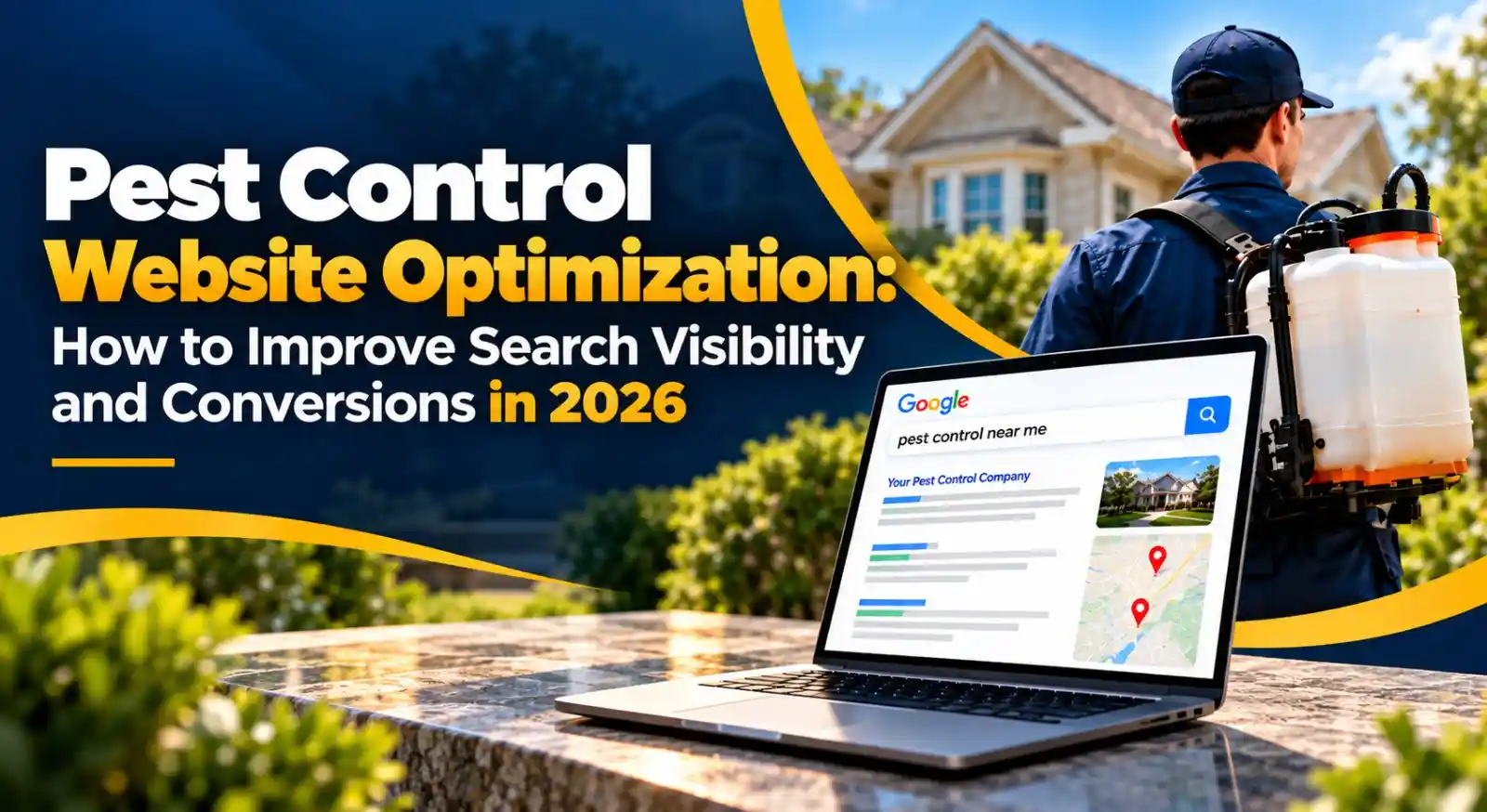
Pest Control Website Optimization: How to Improve Search Visibility in 2026

SEO Expert
- SEO
October 7, 2026
A pest control website should do more than tell people that your company provides pest services. It should help the right customers find you, understand what you offer, trust your business, and take the next step.
That becomes more important in a competitive U.S. market. A homeowner in Staten Island, NY, may search for termite treatment, rodent control, or an exterminator near them and compare several companies before making one phone call.
If your website is slow, confusing, difficult to use on a phone, or missing important service information, you can lose that customer even if your company provides excellent service.
This is where pest control website optimization comes in. Good optimization connects search visibility with a better customer experience.
What Is Pest Control Website Optimization?
Pest control website optimization is the process of improving a website so search engines can understand it and customers can use it easily.
The work includes your service pages, website structure, content, internal links, mobile experience, page speed, local information, and conversion paths.
The goal is not to add more keywords to every page. The goal is to make the website more useful.
For example, if termite treatment is one of your main services, the termite page should clearly explain the problem, the inspection process, treatment options, and what a customer should do next.
The same approach can be used for rodent control, bed bug treatment, mosquito control, commercial pest management, and other important services.
Start With the Services That Matter to Your Business
Not every page on a pest control website has the same value.
A service page that can generate calls for termite treatment is usually more important to the business than an old blog post that receives a small amount of informational traffic.
Start by identifying the services you want to grow. Then make sure each important service has a useful, focused page.
A good service page should answer basic customer questions:
- What problem does the service solve?
- Who needs it?
- What does the treatment involve?
- What should the customer do before or after service?
- How can they contact the company?
This creates a better experience for the customer and gives search engines clearer information about the business.
For a broader strategy, your website optimization can support your Pest Control SEO Services by strengthening the pages that matter most.
How Search Intent Shapes Pest Control Website SEO
One of the biggest mistakes in SEO is treating every search as if it has the same purpose.
Consider three searches:
“How do I know if I have termites?”
The person is looking for information.
“Termite inspection near me”
The person is looking for a service.
“Termite treatment company in Staten Island”
The person is likely comparing local providers.
These searches may relate to the same topic, but they do not require the same page.
A helpful blog post can answer the first question. A detailed service page can address the second. A strong local service page can help with the third.
This is an important part of pest control website SEO optimization. Build pages around what customers are trying to accomplish, not just around a list of keywords.
Improve Your Pest Control Service Pages
Your main service pages should be clear and useful.
A rodent control page, for example, can explain common signs of an infestation, where rodents enter a property, how professional treatment works, and how future problems can be prevented.
A commercial pest control page should speak to businesses and property managers. Their concerns may include recurring service, inspections, documentation, customer safety, and keeping the property operational.
This type of detail makes a page more useful than a short page that simply says, “We provide professional pest control.”
Is Your Pest Control Website Built to Get More Leads?
A website can look professional and still miss valuable search and conversion opportunities. Get a free pest control website audit to identify issues with your service pages, mobile experience, local visibility, website structure, and conversion paths.
Free analysis • No obligation • Built for pest control websites
Make the Website Easy to Navigate
A customer should not have to search through several menus to find a service or contact your company.
Keep the main navigation simple. Important services should be easy to reach, and the phone number or contact option should be visible, especially on mobile devices.
Internal links also help visitors move through the website.
For example, an article about termite warning signs can naturally link to your termite inspection page. A guide about preventing rodents can point readers toward your rodent control service.
These links create a useful path:
Problem → Information → Service → Contact
That is better than adding links simply to increase the number of internal links on a page.
Improve Mobile Experience and Website Speed
Many pest control searches happen when people are away from a desktop computer. A homeowner may search from a phone while dealing with an active pest problem.
If the website takes too long to load or the contact button is difficult to use, the customer may leave and contact another company.
Your website should work well on different screen sizes, load important content efficiently, and make calls and forms easy to access.
Google recommends looking at the overall page experience, including mobile usability and Core Web Vitals. It also makes clear that good Core Web Vitals scores alone do not guarantee high rankings.
That distinction is important. Improve speed because it helps real visitors, not simply because a tool gives you a higher score.
Create Useful Content for Real Pest Control Customers
A pest control company has many opportunities to answer questions that customers ask before they call.
Someone may want to know why mice keep returning, how to recognize termite damage, whether bed bugs can spread, or how to prepare a home for treatment.
These questions can become useful articles and guides.
The important part is quality. Do not publish dozens of short articles that repeat information already available everywhere.
Use real industry knowledge. Explain what customers can expect, describe common situations, and answer questions that technicians hear regularly.
Google’s current guidance emphasizes helpful, reliable, people-first content with original value rather than content created mainly to attract search traffic.
This also makes the website more useful for people using conversational and AI-driven search experiences.
Strengthen Local Information
Pest control is a local service, so your website should make your service area clear.
If you serve Staten Island, customers should not have to guess whether you work in their neighborhood. If you cover several nearby communities, explain those service areas accurately.
Do not create dozens of nearly identical location pages just to target city names. A useful location page should provide genuine information about the services available in that area.
Your website should also support your local search presence. Google says local results are mainly influenced by relevance, distance, and prominence, and recommends keeping Business Profile information complete and accurate.
This is where website optimization and Local SEO for Pest Control naturally work together.
Make Your Website More Trustworthy
Getting someone to your website does not mean you have earned their business.
Pest control customers want to know who will enter their home or business and whether the company can solve the problem.
Your website can reduce that uncertainty with real customer reviews, genuine photos, clear service information, company experience, and relevant licenses or certifications where applicable.
Avoid exaggerated claims. Simple, specific information is usually more convincing than generic statements about being the “best” company.
Measure Pest Control Site Performance
Website optimization should be measured by business results, not just traffic.
Look at which pages receive organic impressions and clicks. Identify the services people search for most often. Then compare that information with calls, contact forms, quote requests, and booked jobs.
Google Search Console can help you understand how pages perform in Google Search, including queries, impressions, clicks, and indexing information.
For example, if a termite page receives many impressions but very few clicks, it may need a better search result presentation. If it receives traffic but almost no inquiries, the problem may be the page experience or conversion path.
This is a more useful approach to pest control site performance than chasing traffic numbers alone.
Frequently Asked Questions
What is pest control website optimization?
It is the process of improving a pest control website’s content, structure, technical performance, local information, and conversion experience.
How does website optimization help pest control SEO?
It helps search engines understand your services while making important information easier for customers to find and use.
Should every pest control service have its own page?
Important services usually deserve dedicated pages when customers search for them separately and the business has useful information to provide.
Does website speed affect SEO?
Website performance is part of Google’s page experience considerations. A faster, easier-to-use website can also provide a better experience for potential customers.
How often should a pest control website be optimized?
Optimization should be ongoing. Review the site when adding services, entering new markets, redesigning the website, or seeing changes in search traffic and leads.
Conclusion
Effective pest control website SEO is not about adding more words or repeating keywords.
It is about building a website that clearly explains your services, answers customer questions, works well on mobile devices, supports local visibility, and makes contacting your company easy.
For pest control businesses competing in the U.S. market in 2026, those improvements can turn a basic website into a much stronger source of search visibility and qualified leads.
Ready to Turn Your Pest Control Website Into a Lead-Generating Asset?
Your website should do more than describe your services. Our Pest Control Website Optimization approach helps improve search visibility, strengthen the customer experience, and make it easier for potential customers to contact your business.
Get Your Free Website Audit →Free website analysis • No obligation • Focused on visibility and conversions
About the Founder:
Rao Adnan Mohyuddin
Founder of Pest Control SEO Service
Rao Adnan is the founder of Pest Control SEO Service. He leads a team that has worked with many pest control companies, helping them grow with SEO, local search, and digital marketing.