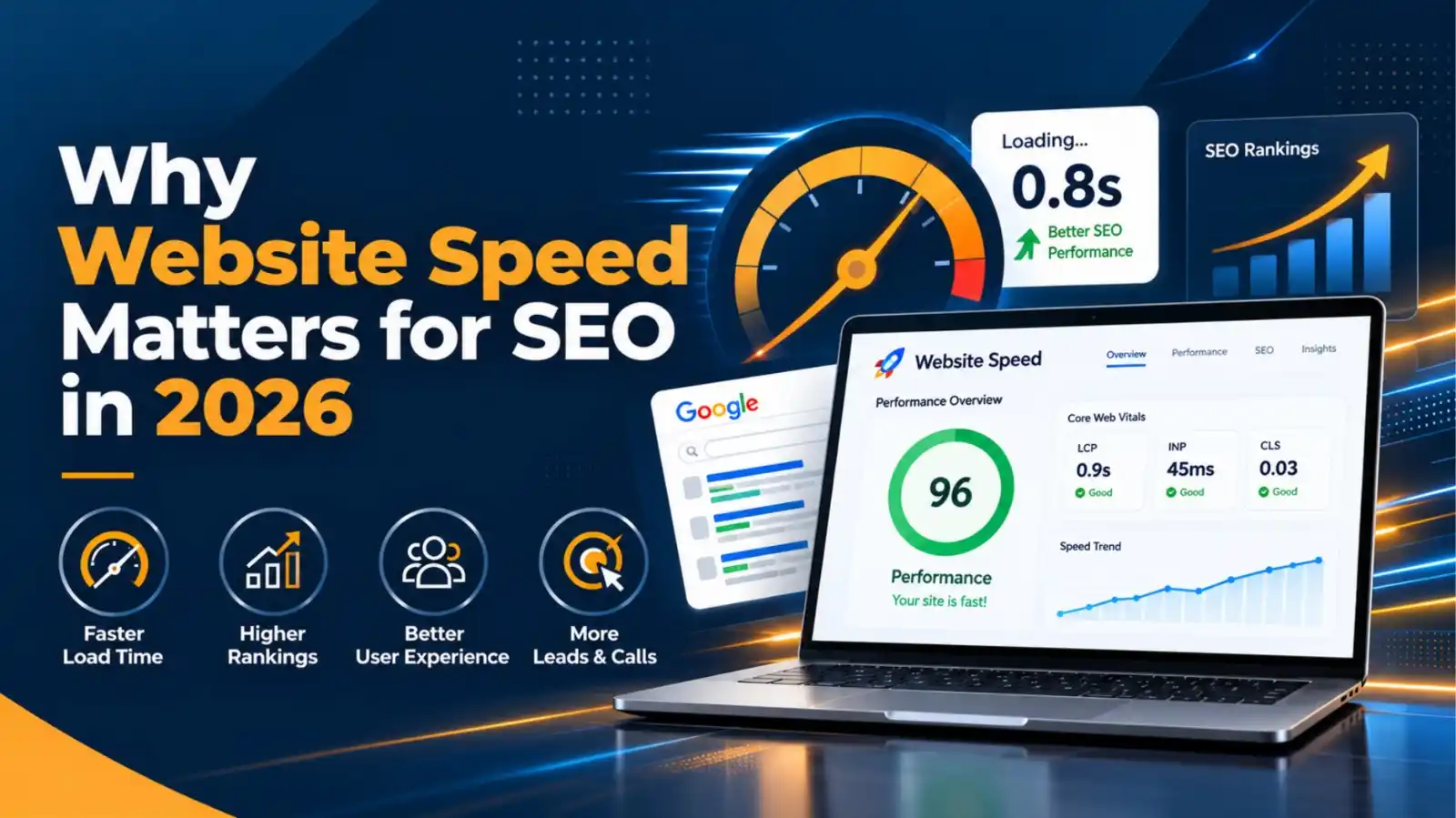
Why website speed matters for SEO in 2026

SEO Expert
- SEO
September 17, 2026
When someone finds ants in their kitchen, termites damaging their property, or rodents in their business, they usually want a quick solution. They search Google, compare local pest control companies, and visit websites to learn more before making a decision.
But if a website loads slowly, visitors may leave before they see your services, read your reviews, or contact your company.
For pest control businesses, website speed is not just a technical issue. It directly affects how easily customers can access your information and take action.
Website speed is an important part of SEO for Pest Control because it improves user experience, supports website performance, and helps create a smoother path from search visitor to potential customer.
In 2026, pest control companies need websites that are fast, mobile-friendly, and easy to use. A well-optimized website can help your business compete in local search, provide a better customer experience, and get more value from your SEO investment.
What Is Website Speed and Why Does It Matter for SEO?
Website speed refers to how quickly a webpage loads and becomes usable after someone clicks on it.
For example, when a customer searches for:
“termite control company near me”
and clicks your website, they expect the page to load quickly and show useful information immediately.
Website speed includes several factors, such as:
- How quickly the page appears
- How fast images and videos load
- How quickly buttons and forms respond
- How stable the page layout remains while loading
For a pest control company, website speed matters because customers often visit your website when they have an urgent problem.
A homeowner looking for emergency pest removal does not want to wait several seconds for a page to load. They want to quickly find:
- Your services
- Your service areas
- Your phone number
- Your booking options
A slow website creates friction in the customer journey.
From an SEO perspective, website speed is part of a larger website experience. Google considers page experience signals, including Core Web Vitals, as part of its search systems. However, speed alone does not guarantee higher rankings. Content quality, relevance, website authority, and other factors also influence search visibility.
For pest control companies, the goal should be creating a website that is both useful and technically efficient.
How Does Website Speed Affect Pest Control SEO?
Website speed influences several areas that are important for Pest Control SEO.
A fast website helps customers find information easily, interact with your pages, and complete actions such as requesting an inspection.
Website Speed and Google Search Rankings
Google uses various signals to understand which pages provide a good experience for users.
Core Web Vitals are part of Google’s page experience evaluation. They measure aspects of website performance, including loading speed, responsiveness, and visual stability.
However, website speed should be viewed as a supporting factor rather than the only SEO strategy.
For example, a fast website with poor service information may not perform well because it does not answer customer needs.
A successful SEO strategy for pest control services requires both:
- Helpful, relevant content
- A technically healthy website
Your termite control page should load quickly, but it should also explain termite problems, treatment options, pricing factors, and how customers can contact your company.
Mobile Experience and User Engagement
Many pest control searches happen on smartphones.
A homeowner may notice signs of pests and immediately search for a nearby exterminator using their mobile device.
If your website is difficult to use on a phone, customers may leave and choose another company.
A good mobile experience includes:
- Fast loading pages
- Easy-to-read text
- Simple navigation
- Click-to-call buttons
- Quick access to service information
Mobile users often have less patience for slow websites. Improving speed can help visitors stay longer and interact with your business.
Website Speed and Pest Control Lead Generation
The main goal of SEO is not only traffic. It is generating business opportunities.
A visitor who cannot quickly find your contact information may never become a lead.
A fast website makes it easier for potential customers to:
- View your pest control services
- Check your service locations
- Read customer reviews
- Fill out contact forms
- Call your company
For pest control companies investing in Pest Control SEO Services, website performance helps maximize the value of the traffic generated through search engines.
What Are Core Web Vitals?
Core Web Vitals are performance measurements created by Google to evaluate important aspects of website experience.
They focus on three main areas:
- Loading performance
- Website responsiveness
- Visual stability
Understanding these metrics helps pest control businesses identify technical problems that may affect visitors.
Largest Contentful Paint (LCP)
Largest Contentful Paint measures how quickly the main content of a page becomes visible.
For example, on a pest control service page, the main content could include:
- The page heading
- A large service image
- Important introductory text
A slow LCP means visitors may see a blank or incomplete page while waiting for content to load.
To improve LCP:
- Compress large images
- Use efficient hosting
- Remove unnecessary page elements
- Improve website code performance
A visitor searching for “bed bug treatment near me” should quickly see useful information instead of waiting for the page to appear.
Interaction to Next Paint (INP)
Interaction to Next Paint measures how quickly a website responds when users interact with it.
Examples include:
- Clicking a menu
- Opening a contact form
- Selecting a service option
- Pressing a booking button
If these actions feel slow, visitors may become frustrated.
For pest control websites, important interactions should work smoothly because customers often want to contact a company quickly.
Cumulative Layout Shift (CLS)
Cumulative Layout Shift measures how much a webpage moves unexpectedly while loading.
For example, a customer may try to click a phone number button, but an image loads and pushes the button somewhere else.
This creates a poor experience.
A stable website keeps important elements, such as:
- Contact buttons
- Navigation menus
- Forms
in predictable positions.
Common Causes of Slow Pest Control Websites
Many pest control websites become slow because of technical issues that build up over time.
Common causes include:
Large Images and Videos
High-quality photos of technicians, equipment, and pest problems can improve a website, but large files can slow loading.
Images should be optimized before being uploaded.
Poor Hosting Performance
A slow server can delay how quickly website content appears.
Reliable hosting helps improve response times and website stability.
Too Many Plugins and Scripts
Many websites use plugins for forms, tracking, chat tools, animations, and other features.
However, unnecessary tools can increase loading time.
Heavy Website Design
Complex animations, large videos, and excessive design elements may create a slower experience, especially on mobile devices.
A professional pest control website should focus on clarity and usability.
How to Check Your Pest Control Website Speed
Before making improvements, test your current website performance.
Useful tools include:
- Google PageSpeed Insights
- Google Search Console Core Web Vitals report
- Lighthouse performance testing
Check important pages such as:
- Homepage
- Termite service page
- Bed bug treatment page
- Contact page
- Location pages
Do not only test your homepage. Service pages often generate the most valuable traffic and leads.
Review:
- Loading performance
- Mobile experience
- Technical issues
- User experience problems
How to Improve Website Speed for Better SEO
Improving website speed does not always require a complete redesign.
Small technical improvements can create noticeable results.
Optimize Images and Videos
Images are often one of the biggest causes of slow websites.
Improve performance by:
- Compressing image files
- Using modern formats
- Uploading correctly sized images
- Avoiding unnecessary videos
Your website should still look professional while loading efficiently.
Improve Hosting and Server Response Time
Your hosting provider affects how quickly your website responds.
Choose hosting that provides:
- Reliable uptime
- Good performance
- Adequate resources
A slow server can affect every page on your website.
Reduce Unnecessary Scripts and Plugins
Remove features that do not provide real value to customers.
Examples:
- Unused plugins
- Excessive tracking scripts
- Unnecessary animations
A simpler website often provides a better user experience.
Improve Mobile Website Performance
Since many local searches happen on phones, mobile optimization is essential.
Improve mobile performance by:
- Simplifying navigation
- Reducing large files
- Making buttons easy to tap
- Improving page loading speed
How to Monitor Website Speed and SEO Performance
Website optimization is not a one-time task.
Pest control companies should regularly monitor:
- Website speed
- Search traffic
- Customer inquiries
- Mobile performance
- Page engagement
Track whether improvements lead to better business outcomes.
For example:
A faster termite service page that receives more visitors is useful, but the bigger question is whether those visitors contact your company.
A professional Pest Control SEO Agency can help monitor technical improvements alongside traffic, rankings, and lead generation.
Frequently Asked Questions
Does website speed affect pest control SEO rankings?
Website speed can influence user experience and is considered within Google’s page experience signals. However, it is only one part of SEO.
A fast website still needs valuable content, relevant services, and strong local SEO foundations.
What is a good website loading speed for SEO?
A good website should load quickly and provide a smooth experience on both desktop and mobile devices.
Google’s Core Web Vitals provide performance benchmarks, but businesses should also focus on whether customers can easily access information and contact them.
Can a slow website reduce pest control leads?
Yes. A slow website can create frustration and cause potential customers to leave before contacting your business.
Improving speed can help create a smoother experience for visitors who are looking for pest control services.
How often should pest control companies test website speed?
Website speed should be checked regularly, especially after:
- Website redesigns
- Adding plugins
- Publishing large images
- Changing hosting providers
Regular monitoring helps identify problems before they affect customers.
Conclusion
Website speed is an important part of a successful SEO for Pest Control strategy in 2026.
A fast website helps customers quickly find your services, improves mobile usability, and creates a better experience for people searching for pest control solutions.
However, speed is only one part of digital growth. Pest control companies also need helpful content, optimized service pages, strong local SEO, and a trustworthy online presence.
By improving website performance alongside other SEO efforts, businesses can create a stronger foundation for attracting local customers and generating more leads.
For pest control companies competing in the USA market, a fast and user-friendly website is no longer optional. It is an essential part of building a successful online presence.
About the Founder:
Rao Adnan Mohyuddin
Founder of Pest Control SEO Service
Rao Adnan is the founder of Pest Control SEO Service. He leads a team that has worked with many pest control companies, helping them grow with SEO, local search, and digital marketing.